
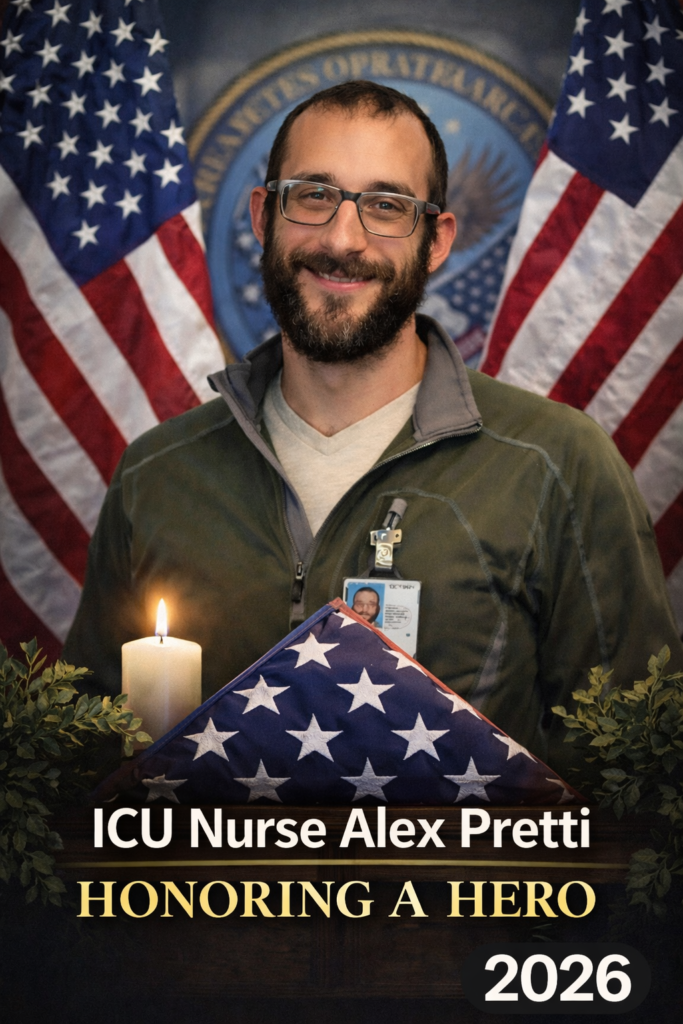
Alex Pretti early life
Remembering a Voice for Compassion
In the fast-paced world of healthcare, few names have resonated as deeply in 2026 as Alex Jeffrey Pretti. Known to his colleagues as a “nurse’s nurse,” Pretti dedicated his life to the intensive care of others, particularly the veterans who served the nation. His story is not just one of professional excellence, but of a man who believed that care should extend far beyond the walls of a hospital.
From his roots in the Midwest to his final days in Minneapolis, Alex Pretti’s biography reflects a life driven by empathy, science, and an unwavering commitment to human dignity.
The Intersection of Care and Conflict: A Comprehensive Biographical Study of Alex Jeffrey Pretti
The death of Alex Jeffrey Pretti on January 24, 2026, serves as a poignant and harrowing case study in the convergence of professional ethics, civic activism, and the limits of federal law enforcement authority in the twenty-first century. A 37-year-old intensive care nurse for the United States Department of Veterans Affairs, Pretti’s life was defined by a profound dedication to the preservation of human health and dignity, a commitment that ultimately propelled him into a fatal confrontation with federal agents on the streets of Minneapolis. This report provides an exhaustive biographical analysis of Pretti’s life, from his formative years in the Midwest to his sophisticated contributions in medical research and his ultimate transition into critical care nursing, while examining the minute-by-minute details of the incident that claimed his life and the subsequent national fallout.
Origins and Formative Influences
Alex Jeffrey Pretti was born on November 9, 1988, in Park Ridge, Illinois. Born into a family that emphasized the values of empathy, service, and civic engagement, Alex was the son of Michael and Susan Pretti. While his birth took place in the Chicago metropolitan area, the landscape of his childhood and adolescence was primarily Green Bay, Wisconsin, where the Pretti family relocated and established their roots.
The Green Bay Years
Pretti’s early life in Green Bay was characterized by a robust involvement in the community’s social and athletic structures. He attended Preble High School, where he was recognized as a versatile student-athlete. His participation in football, baseball, and track and field demonstrated not only physical dynamism but a capacity for discipline and teamwork that would later define his professional clinical practice.
Beyond the athletic arena, Pretti’s interests were notably multifaceted. He was a dedicated member of the Boy Scouts of America, an organization that likely instilled in him the foundational principles of preparedness and service to others. Furthermore, he contributed his voice to the Green Bay Boy Choir, an experience that added a dimension of artistic collaboration and harmony to his upbringing. These diverse formative experiences—ranging from the physical rigors of the gridiron to the precision of choral performance—created the bedrock of a personality that was simultaneously resilient, compassionate, and deeply attuned to the nuances of human interaction.
Personal Life: The Man Behind the Scrubs
Living in the Lyndale neighborhood of Minneapolis, Alex was described by neighbors as a “warmhearted and quiet” man. He lived in a four-unit condo with his beloved dog and was known for being the first to help if a neighbor suspected a gas leak or needed a hand with a local task.
Alex was a man of diverse interests:
-
Outdoorsman: He had a profound love for nature and was vocal about environmental health.
-
Community Watcher: He was known to “bear witness” to events in his city, often using his phone to document local happenings to ensure accuracy and accountability.
Professional Achievements:
-
Mentorship: Alex was a respected mentor to nursing students, often described as patient and encouraging.
-
Advocacy: He was an active member of the American Federation of Government Employees (AFGE), advocating for the rights of healthcare workers and the quality of care for veterans.
-
Veterans’ Care: Colleagues recalled his deep respect for patients, often highlighting a viral video of him solemnly honoring a veteran who had passed away under his care.
-
|
Vital Statistics and Early Chronology |
Detail |
Source |
|---|---|---|
|
Full Name |
Alex Jeffrey Pretti |
|
|
Date of Birth |
November 9, 1988 |
|
|
Place of Birth |
Park Ridge, Illinois |
|
|
Primary Residence (Youth) |
Green Bay, Wisconsin |
|
|
|
High School |
Preble High School (Class of 2006) |
|
Youth Organizations |
Boy Scouts of America, Green Bay Boy Choir |
|
|
Athletic Participation |
Football, Baseball, Track |
|

Alex Jeffrey Pretti: A Detailed Biography and Profile
When discussing the alex pretti biography, it is important to look at the man who became a symbol of healthcare dedication in Minneapolis. Alex Jeffrey Pretti (his alex pretti real name) was a 37-year-old American citizen who spent his life serving others. For those looking for alex pretti background information, he was a man of diverse talents, ranging from scientific research to front-line intensive care nursing.
Early Life and Origins
If you are wondering where was alex pretti born, he entered the world on his alex pretti birthday date of November 9, 1988, in Park Ridge, Illinois. Regarding where was alex pretti born and raised, he grew up in Green Bay, Wisconsin, where he attended Preble High School. His alex pretti early life was filled with community involvement; he was a Boy Scout and a talented singer in local vocal groups. In terms of alex pretti nationality, he was a U.S. citizen, and his alex pretti ethnicity and alex pretti origins trace back to Northern Italian descent.
Academic Pursuits: The Scholar-Scientist
In 2006, following his graduation from Preble High School, Pretti moved to the Twin Cities to pursue higher education at the University of Minnesota. This move marked the beginning of a two-decade-long relationship with the institution and the broader Minneapolis community.
The Biology, Society, and Environment Major
At the University of Minnesota, Pretti enrolled in the College of Liberal Arts, eventually earning a Bachelor of Arts degree in 2011. His choice of major—Biology, Society, and Environment (BSE)—is central to understanding his subsequent life choices. The BSE program is designed for students who seek to understand health and medicine within the broader context of social, environmental, and political factors. This interdisciplinary framework provided Pretti with the intellectual tools to view clinical health as an extension of social justice, a perspective that would later inform his activism during the immigration crackdowns of 2026.
The University of Minnesota’s Department of Geography, which houses the BSE major, noted that the program attracts students dedicated to “human flourishing” and the pursuit of truth in the face of power. Pretti was remembered by faculty as “the best of us,” a student who demonstrated integrity, kindness, and a commitment to human well-being that transcended the classroom.
Transition to Nursing
Following his undergraduate studies, Pretti did not immediately enter the nursing profession. Instead, he worked as a research scientist, contributing to the academic and clinical knowledge base of the Twin Cities medical community. However, the desire for direct patient impact eventually led him back to the classroom. He attended nursing school, obtaining an Associate Degree in Nursing (ADN) from Minneapolis College, where he was celebrated as an exemplar of the heart of nursing. He subsequently integrated this clinical training with his scientific background, becoming a Registered Nurse (RN) with a license issued on January 19, 2021.
|
Educational Timeline |
Institution |
Degree / Major |
Year |
|---|---|---|---|
|
Secondary Education |
Preble High School |
High School Diploma |
2006 |
|
Undergraduate Studies |
University of Minnesota |
B.A. Biology, Society & Environment |
2011 |
|
Nursing Education |
Minneapolis College |
Associate Degree in Nursing (ADN) |
c. 2020 |
|
Professional Licensure |
State of Minnesota |
Registered Nurse (RN) |
Jan 19, 2021 |
Professional Contributions: The VA and Medical Research
Pretti’s professional life was a dual-track journey of scientific inquiry and critical care excellence. His career was primarily rooted in the United States Department of Veterans Affairs (VA) and the University of Minnesota’s clinical research apparatus.
Scientific Achievements in Infection Control
Beginning around 2012, Pretti served as a junior scientist, assisting in various high-stakes research projects. One of his most significant professional achievements occurred during his tenure with the Minneapolis VA Health Care System’s infectious disease department. Under the mentorship of Dr. Dimitri Drekonja, Chief of Infectious Diseases, Pretti was “instrumental” in completing a major clinical trial focused on the prevention of Clostridioides difficile (C. diff), a devastating bacterial infection that is a leading cause of hospital-acquired illness and mortality.
Colleagues described Pretti as a “team player” who was “always asking the rest of the team what he could do” to alleviate the workload of others. His transition from research scientist to ICU nurse was seen not as a departure from science, but as an application of it to the most critical moments of veteran care.
The Intensive Care Unit: Caring for Veterans
As a Registered Nurse in the Intensive Care Unit (ICU) at the Minneapolis VA, Pretti specialized in caring for critically ill veterans. This role required a sophisticated mastery of complex medical technologies, medication management, and the emotional intelligence necessary to support patients’ families during life-altering crises.
Pretti was deeply committed to his role as a caregiver for those who had served the nation. He was a member of the American Federation of Government Employees (AFGE), reflecting his commitment to the welfare of federal healthcare workers. His “infectious” spirit and quick wit were noted by colleagues, who viewed him as an “outstanding” nurse dedicated to the highest standards of patient care.
The “Final Salute” and Ethical Advocacy
Pretti’s dedication to the dignity of veterans was captured in a widely circulated video shared by Mac Randolph, the son of a veteran who passed away under Pretti’s care. The video depicts Pretti delivering a “final salute” to the deceased veteran, a solemn tradition within the VA. In this moment, Pretti delivered an emotional dedication that would later become a hallmark of his legacy:
”Today, we remember that freedom is not free. We have to work at it, nurture it, protect it and even sacrifice for it. May we never forget and always remember our brothers and sisters who have served, so that we may enjoy the gift of freedom”.
These words underscored Pretti’s belief that nursing was not a passive occupation but an active, ethical commitment to the protection of human rights and the preservation of democracy. This philosophy would eventually drive him to participate in the protests that led to his death.
Personal Life: Passions and Community
Outside the hospital, Alex Pretti lived a life characterized by a love for the outdoors, a dedication to his community, and a quiet, warmhearted nature.
Residential Life and Neighbors
Pretti resided in a four-unit condominium building in the Whittier neighborhood of South Minneapolis, approximately two miles from the site of his final encounter with federal agents. Neighbors, such as Sue Gitar, described him as a “wonderful person” and a “gentle soul” who was always willing to assist others, whether by investigating a potential gas leak or helping with building repairs. He lived alone, but was known to be social and frequently hosted friends.
The Bond with Joule and Outdoor Interests
An avid outdoorsman, Pretti was frequently seen in the Twin Cities’ parks and trails. His constant companion for many years was Joule, a Catahoula Leopard dog. The bond between Pretti and Joule was a defining aspect of his personal identity; he took Joule on nearly all his outdoor adventures. Tragically, Joule had passed away about a year prior to Pretti’s death, a loss that deeply affected him.
Pretti was also a competitive cyclist and a loyal customer of the “Angry Catfish” bike shop in South Minneapolis. He rode a Surly bicycle and was an active participant in local cycling events. His love for mountain biking was a shared passion with his colleague, Dr. Drekonja, with whom he had frequently planned future rides.
Married Life and Personal Transitions
Pretti had been previously married, but the couple divorced more than two years prior to 2026. His ex-wife, who chose to maintain her anonymity, described him as a “Democratic voter” who had been deeply moved by the civil rights protests following the 2020 killing of George Floyd. She recalled that while he could be vocal and outspoken toward law enforcement during protests, he was never known to be physically confrontational. Following their divorce, Pretti’s ex-wife moved out of the state, and the two had not spoken for some time before his death.
|
Professional and Personal Attributes |
Details |
Source |
|---|---|---|
|
Employer |
U.S. Department of Veterans Affairs (VA) |
|
|
Clinical Specialty |
Intensive Care Unit (ICU) |
|
|
Union Membership |
American Federation of Government Employees (AFGE) |
|
|
Hobbies |
Competitive Cycling, Mountain Biking, Outdoors |
|
|
Companion Animal |
Joule (Catahoula Leopard Dog, deceased c. 2025) |
|
|
Residence |
South Minneapolis, Whittier Neighborhood |
|
|
Marital Status |
Divorced (c. 2023) |
|
The Sociopolitical Climate of 2026: Operation Metro Surge
To understand the events of January 24, 2026, one must examine the intense friction between federal immigration authorities and the city of Minneapolis. Following the inauguration of a new federal administration, the Department of Homeland Security (DHS) launched “Operation Metro Surge,” a large-scale enforcement program that deployed hundreds of federal agents to cities like Minneapolis to carry out arrests related to immigration status.
The Death of Renee Nicole Good
Tensions in Minneapolis had been escalating for weeks following the January 7, 2026, killing of Renee Nicole Good, a 37-year-old local mother, by an Immigration and Customs Enforcement (ICE) agent during a federal operation. Good’s death, characterized by federal officials as “self-defense” but viewed by locals as an extrajudicial killing, sparked massive daily protests in the Twin Cities.
Alex Pretti, driven by his ethical commitment as a nurse and his background in “Biology, Society, and Environment,” became an active participant in these protests. His father, Michael Pretti, noted that Alex was “very upset with what was happening in Minneapolis,” particularly the tactics of federal agents that he viewed as “kidnapping children” and “grabbing people off the street”.
The Shooting of Alex Pretti: A Chronological Reconstruction
On the morning of Saturday, January 24, 2026, federal agents were conducting a targeted operation near the intersection of 26th Street and Nicollet Avenue in South Minneapolis. The objective was reportedly to detain an undocumented individual with a “significant criminal history,” a claim that local authorities later disputed, noting the individual’s record consisted only of decade-old traffic misdemeanors.
9:00 AM – 9:04 AM: Observation and Intervention
Alex Pretti was present at the scene, not as a direct combatant, but as a witness. He was positioned across the street from a doughnut shop where the pursuit was unfolding. Clad in a brown jacket, Pretti was utilizing his smartphone to film the federal agents’ activities, a practice he had adopted during previous protests.
Bystander videos verified by the Associated Press and other major outlets show the atmosphere was chaotic, with protesters blowing whistles and federal agents using aggressive tactics to clear the area. At one point, an officer shoved a demonstrator wearing an orange backpack.
9:05 AM: The Fatal Seconds
The situation reached a critical point when a federal agent pushed a woman to the ground. Pretti, true to his caregiver instincts, moved toward the sidewalk to assist her. He stood between the agent and the woman, placing his arm around her in a protective gesture.
In the ensuing struggle:
- Chemical Irritant Deployment: An agent pepper-sprayed Pretti at close range.
- Compliance Gestures: Videos show Pretti holding his hands up—his right hand holding his phone and his left hand empty—while attempting to shield himself from the spray.
- The Tackle: Despite his lack of threatening movements, several agents tackled Pretti to the street.
- The Disarming: While Pretti was pinned to the ground with his arms near his head, an agent reached into the scrum and removed a 9mm handgun from Pretti’s waistband. Pretti was a licensed “permit to carry” holder and possessed the weapon legally.
- The Gunshots: Approximately one second after the agent emerged from the pile holding the retrieved weapon, a volley of shots was fired by another agent.
Pretti was shot multiple times—reports indicate at least ten shots were fired within five seconds—and he was struck while already incapacitated on the pavement. Federal medics on the scene provided immediate aid, but Pretti was later pronounced dead at a medical center.
|
Incident Timeline: Jan 24, 2026 |
Event |
Source |
|---|---|---|
|
9:00 AM |
Federal agents arrive at 26th & Nicollet; pursuit begins. |
|
|
9:03 AM |
Pretti begins filming federal agents with his smartphone. |
|
|
9:04 AM |
Agent pushes a female protester; Pretti intervenes to assist her. |
|
|
9:04:30 AM |
Pretti pepper-sprayed and tackled by multiple agents. |
|
|
9:05:00 AM |
One agent removes Pretti’s holstered gun from the scrum. |
|
|
9:05:01 AM |
Another agent fires a volley of shots (~10) into Pretti. |
|
|
9:15 AM |
Pretti pronounced dead at Hennepin County Medical Center. |
|
The Battle of Narratives: DHS vs. Video Evidence
The aftermath of the shooting was marked by a sharp divergence between the official federal account and the visual evidence recorded by bystanders.
The Federal Position
DHS spokesperson Tricia McLaughlin and Border Patrol Commander Gregory Bovino defended the shooting as a “defensive” action. They asserted that Pretti had “approached” agents with a handgun and “violently resisted” efforts to disarm him. Senior administration officials went further, labeling Pretti a “domestic terrorist” and an “assassin” who had intended to harm federal officers. DHS released an image of the 9mm handgun recovered at the scene to support their claim.
Forensic and Video Contradictions
Analyses of the bystander footage by CNN, the BBC, and Reuters contradicted the “brandishing” claim. The videos showed:
- Pretti’s right hand was occupied by his cell phone.
- His left hand was empty and raised above his head.
- The handgun remained holstered or tucked into his waistband until it was physically removed by an agent.
- The agent who retrieved the gun had moved away from Pretti before the fatal shots were fired by a different agent, suggesting a breakdown in communication among the tactical team.
Local law enforcement, led by Minneapolis Police Chief Brian O’Hara, confirmed that Pretti had no criminal history and was a “lawful gun owner”. Governor Tim Walz and County Attorney Mary Moriarty expressed grave concern over the federal agents’ refusal to allow local investigators access to the scene, which was blocked by federal armored vehicles for hours.
Institutional Fallout and National Response
The death of a VA nurse at the hands of federal agents created an unprecedented crisis for the Department of Veterans Affairs.
The VA’s Internal Conflict
VA Secretary Doug Collins issued a statement expressing condolences but primarily blamed the tragedy on local officials’ “refusal to cooperate” with federal immigration enforcement. This response was widely criticized by VA employees across the nation. In a move that further alienated staff, VA leadership in Washington reportedly blocked a request from workers at the Minneapolis VA to hold an “honor walk” for Pretti, stating that “it can’t happen”.
Nursing Community Response
Professional nursing organizations responded with unified outrage. The American Association of Critical-Care Nurses (AACN), the American Nurses Association (ANA), and the Oregon Nurses Association (ONA) issued statements characterizing the killing of a nurse in the line of civic duty as a profound tragedy. They emphasized that nurses are ethically bound to stand up for human rights and that Pretti was “sacrificing his life to protect the sick and vulnerable”.
Cultural and Global Impact
Pretti’s death resonated far beyond the Twin Cities.
- Vigils: Hundreds of nurses held vigils across the country, from Portland to Green Bay, where a stethoscope and a “hero” award were placed at a memorial.
- Artistic Tribute: Bruce Springsteen released a song titled “Streets of Minneapolis” to honor Pretti and Renee Good.
- International Scrutiny: Mary Lawlor, the United Nations Special Rapporteur for the Protection of Human Rights Defenders, condemned the “extrajudicial killing” of Pretti, noting he was killed while documenting human rights violations.
Conclusion: The Legacy of a Healer-Citizen
Alex Jeffrey Pretti’s 37 years of life were a testament to the power of care as a civic force. From the surgical precision required in his C. diff research to the emotional gravity of his “final salutes” to dying veterans, Pretti lived as a man who understood that human health is inextricably linked to social justice.
The incident on January 24, 2026, was not a departure from his nursing career, but its final, most courageous chapter. By placing himself between a militarized agent and a fallen neighbor, Pretti exemplified the highest calling of the nursing profession: the advocacy for the vulnerable at any cost. His death remains a catalyst for a national debate on the militarization of domestic law enforcement and the protections afforded to those who bear witness to the deployment of state power. In the quiet corridors of the Minneapolis VA and on the loud streets of South Minneapolis, Alex Jeffrey Pretti is remembered as a man who believed that freedom is never free, and that the duty to help another is the most sacred of human bonds.
FAQ Schema (manual content):
- Q: Why is Alex Pretti trending on Google? A: Alex Pretti began trending in January 2026 after news reports about the tragic shooting of the ICU nurse during a federal operation, leading to widespread public attention and searches.
- Q: Was Alex Pretti a nurse? A: Yes, Alex Pretti was an intensive care nurse working for the U.S. Department of Veterans Affairs.
- Q: Where was Alex Pretti from? A: He was born in the United States and worked in Minnesota.
- To address your request, I have compiled a comprehensive FAQ section specifically for Alex Pretti, followed by a clear distinction between him and Olympic athlete Alysa Liu, as they are both prominent in early 2026 news.
- What was Alex Pretti’s full name and birth date? His full name was Alex Jeffrey Pretti. He was born on November 9, 1988, in Park Ridge, Illinois.
- Where was Alex Pretti from and what was his nationality? Alex Pretti was a United States citizen. He was born in Illinois and raised in Green Bay, Wisconsin, before moving to Minneapolis, Minnesota.
- What was Alex Pretti’s occupation and work history? Alex was a Registered Nurse (RN) specializing in Intensive Care (ICU) at the Minneapolis VA Medical Center. Before becoming a nurse in 2021, he worked as a research assistant and scientist, contributing to medical research on cancer and infection treatments.
- Where did Alex Pretti go to college and nursing school? He attended the University of Minnesota, graduating in 2011 with a Bachelor of Arts in Biology, Society, and Environment. He later obtained his nursing license in Minnesota in 2021.
- Was Alex Pretti fired from his nursing job? No. At the time of his passing in January 2026, Alex Pretti held an active nursing license and was currently employed by the U.S. Department of Veterans Affairs (VA). There is no record of him being fired.
- Did Alex Pretti have a criminal record? No. According to the Minneapolis Police Chief, Alex Pretti had no criminal history. His only prior contacts with the law were minor traffic-related citations (a speeding ticket and a parking violation).
- What is the connection between Alex Pretti and the 2026 protests? Alex was a member of the American Federation of Government Employees (AFGE) and was known to observe and document federal enforcement activities in his neighborhood. He was involved in a fatal encounter with federal agents on January 24, 2026, which sparked nationwide vigils by nursing associations (like the WSNA and ANA) and community members.
Important Distinction: Alex Pretti vs. Alysa Liu
While both names are trending in February 2026, they are not related.
-
Alex Pretti: A 37-year-old ICU nurse from Minneapolis whose life and career are being memorialized following his death in January 2026.
-
Alysa Liu: A 20-year-old American figure skater and UCLA student who made history at the 2026 Milano Cortina Winter Olympics.
Alysa Liu 2026 Quick Facts:
-
Achievement: Won two Gold Medals (Women’s Singles and Team Event) in February 2026.
-
History: Became the first American woman to win Olympic individual gold in figure skating in 24 years.
-
Education: Currently a psychology student at UCLA.