
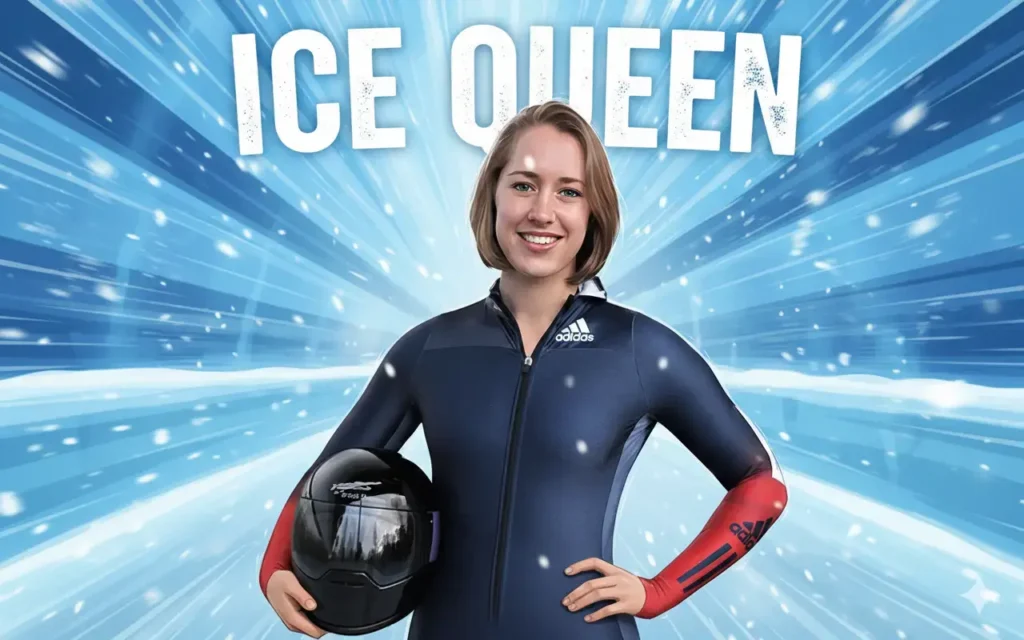
In February 2026, as the world turns its eyes to the Milano-Cortina Winter Olympics, one name is back on the lips of sports fans: Lizzy Yarnold. While she is no longer hurtling down icy chutes at 90mph, her presence at the Games is more poignant than ever.
As a double Olympic Gold medalist (Sochi 2014 and Pyeongchang 2018), Yarnold has taken on a new mantle this year—sharing her expertise and emotional insights as a lead pundit for the BBC. Her story in 2026 is one of “life after the podium,” balancing a busy family life with the responsibility of inspiring a new generation of British sliders.
Lizzy Yarnold: Britain’s Ice Queen Who Conquered the Olympics
When it comes to Winter Olympic success in the United Kingdom, few names shine brighter than Lizzy Yarnold. Fearless, focused, and mentally strong, she became one of Britain’s most successful Winter Olympians of all time.
Winning Olympic gold is already a life-changing achievement. Winning it twice — and defending your title — is something truly extraordinary. Lizzy Yarnold did exactly that, and in doing so, she made British sporting history.
Her story is not only about medals. It is about courage, mindset, and belief.
Early Life and Sporting Beginnings
Lizzy Yarnold was born on 31 October 1988 in Sevenoaks, Kent, England. From a young age, she was energetic and competitive. She loved sport and initially trained as a heptathlete during her teenage years.
While studying Geography at university, she discovered skeleton racing through a national talent programme designed to identify future Olympic athletes.
Skeleton is not a typical British sport. It involves racing face-first down an icy track at speeds exceeding 80 miles per hour on a small sled. It demands bravery, balance, and complete mental control.
Lizzy quickly proved she had the right mindset for it.
Breaking Through with Team GB
After being selected through a national talent search, Lizzy joined Team GB’s skeleton programme. Her progress was remarkable.
Within a few years, she moved from beginner to international competitor. Coaches were impressed not only by her physical ability but also by her mental discipline.
By 2013, she had already become World Champion. It was clear she was ready for the Olympic stage.
Lizzy Yarnold: Olympic Gold – Sochi 2014
Lizzy made her Olympic debut at the Sochi Winter Games in 2014.
The pressure was intense. Representing Great Britain at the Olympics brings national expectations. As a medal favourite, she carried even greater responsibility.
But she delivered four outstanding runs and secured gold in women’s skeleton.
At just 25 years old, she became Olympic champion.
Her victory inspired many young athletes across the UK and brought new attention to British skeleton racing.
Defending Her Title – PyeongChang 2018
Winning Olympic gold once is difficult. Defending it is even harder.
Four years later, Lizzy returned to compete at the PyeongChang Winter Olympics in 2018.
Media pressure was enormous. Competitors were stronger. Expectations were sky-high.
Yet once again, she showed exceptional composure. In a dramatic final run, she secured her second Olympic gold medal.
She became the first British athlete to win two Winter Olympic gold medals and the first British woman to defend an individual Olympic title at a Winter Games.
It was a historic moment for British sport.
The Mental Game: Her Secret Strength
Skeleton racing is often described as controlled fear. Athletes slide head-first down an ice track at extreme speed with very little protection.
For Lizzy, mental preparation was just as important as physical training.
She worked closely on mindset, visualisation, and emotional control. She has often spoken about how managing pressure helped her perform at her best when it mattered most.
Her calmness became her competitive advantage.
Retirement and Life Beyond the Ice
In 2019, Lizzy Yarnold announced her retirement from competitive skeleton.
She explained that she had achieved everything she set out to achieve in the sport. Rather than continuing simply to compete, she chose to step away at the top of her career.
Since retiring, she has focused on:
- Motivational speaking
- Supporting mental health awareness
- Encouraging young athletes
- Family life and motherhood
She has said that becoming a mother is one of the most meaningful chapters of her life.
| Category | Details |
| Full Name | Elizabeth “Lizzy” Yarnold OBE |
| Current Age (2026) | 37 Years Old (Born October 31, 1988) |
| Nationality | British (Born in Sevenoaks, Kent) |
| Current Residence | Shedfield, Hampshire, England |
| Primary Occupation | BBC Sports Pundit, Executive Coach, and Mentor |
| Olympic Achievement | Double Gold Medalist (Sochi 2014 & PyeongChang 2018) |
| Sporting Discipline | Skeleton Racing (Retired October 2018) |
| Education | University of Gloucestershire (Geography and Sport & Exercise Science) |
| Height / Weight | 5 ft 8 in (173 cm) / Post-retirement physique |
| Family Status | Married to James Roche (since 2016) |
| Children | Three Daughters |
| 2026 Role | Lead Skeleton/Luge Pundit for BBC at Milano-Cortina 2026 |
Career & Impact Highlights
-
Milano-Cortina 2026: Lizzy has been a central figure in the BBC’s Olympic coverage, notably going viral for her emotional reaction to British skeleton gold medalists Matt Weston and Tabitha Stoecker.
-
Medical History: Her retirement was influenced by significant physical tolls, including a back operation for slipped discs and the removal of a knee tumor shortly after the 2018 Games.
-
Advocacy: She is a vocal advocate for athlete wellbeing and mental health, working with the British Olympic Association (BOA) to help athletes transition into life after professional sports.
-
Commercial Ventures: In 2026, she has partnered with brands like Corona Cero to promote outdoor lifestyle and nature conservation.
Lizzy Yarnold: Awards and Recognition
Lizzy’s achievements have been widely recognised in the UK.
She received one of the country’s highest honours for her services to sport. Her contribution to British Winter Olympic history is now permanent.
She remains the most successful British Winter Olympian of all time.
Why Lizzy Yarnold Matters for the UK
Before her success, skeleton was not widely known in Britain.
After her victories:
- Public interest in Winter sports increased
- Young athletes joined development programmes
- Media coverage expanded
- Britain earned global respect in skeleton racing
Her journey showed that British athletes can dominate even in sports traditionally associated with colder countries.
For UK readers, her story represents resilience, belief, and national pride.
Interesting Facts About Lizzy Yarnold
- She originally trained in athletics before switching to skeleton.
- She once described skeleton racing as “terrifying but addictive.”
- She believes mindset training is key to high performance.
- She achieved Olympic success within just a few years of discovering the sport.
- She remains one of the UK’s most decorated Winter athletes.
The Legacy She Leaves Behind
Lizzy Yarnold’s legacy goes beyond medals.
She changed how Britain views Winter sport. She demonstrated that mental strength can be as powerful as physical strength. She proved that late discovery of talent does not limit success.
Her story continues to inspire future generations of British athletes — especially young women who want to compete at the highest level.
In the history of UK sport, her name will always stand proudly among the greats.
Matt Weston Olympics
Matt Weston has quickly become one of Britain’s most exciting talents in Olympic skeleton. Representing Team GB, he competes in the men’s skeleton event at the Winter Olympics, racing head-first down an icy track at incredible speeds. His performances on the international circuit have positioned him as a serious medal contender for future Olympic Games. With strong World Cup finishes and growing experience, many British sports fans are watching his Olympic journey with high expectations.
Matt Weston Age
Matt Weston was born in 1997, making him part of a new generation of British winter sports athletes. Still in his twenties, he represents the future of British skeleton. His relatively young age gives him strong potential for multiple Olympic cycles, including the upcoming Winter Games. For fans asking about long-term medal prospects, his age suggests he has many competitive years ahead.
British Skeleton
British skeleton has developed into one of the United Kingdom’s most successful Winter Olympic disciplines. Despite the UK not being known for snow sports, the national programme has produced world champions and Olympic gold medallists. Through strong talent identification systems and mental performance coaching, Britain has built a reputation for excellence in this high-risk sport. Athletes train both in the UK and abroad, often in Europe, to maintain world-class standards.
How Old Is Matt Weston?
For those wondering how old Matt Weston is, he is in his mid-twenties. This places him in a prime competitive age for skeleton racing, where physical strength, sprint power, and mental focus are equally important. Many skeleton athletes peak between their mid-twenties and early thirties, meaning Weston could still be approaching his strongest Olympic years.
Where Does Matt Weston Train?
Matt Weston trains as part of the British Skeleton performance programme. While the UK does not have permanent Olympic-standard sliding tracks, British athletes train overseas, mainly in Europe and North America, where top skeleton facilities are located. Training includes sprint work, strength conditioning, start practice, and extensive track time during the winter season.
Matt Weston Rugby
Before committing fully to skeleton, Matt Weston had a background in rugby. His rugby experience helped develop explosive sprint speed and lower-body power — both essential for skeleton starts. Many British skeleton athletes come from strong athletic or rugby backgrounds, as the sport demands powerful acceleration in the first few metres of a race.
Christopher Grotheer
Christopher Grotheer is one of the leading competitors in men’s skeleton and a major rival on the international stage. The German athlete has achieved significant success at World Championships and the Winter Olympics. Competition between athletes like Grotheer and Britain’s Matt Weston adds excitement to major events, particularly during World Cup and Olympic finals.
Winter Olympics Skeleton
Skeleton at the Winter Olympics is one of the most thrilling sliding sports. Athletes race individually, completing multiple timed runs, with total time determining the winner. Speeds can exceed 80 mph, and precision steering is critical. The sport has grown in popularity thanks to dramatic finishes and intense rivalries between leading nations.
Matt Weston Partner
Information about Matt Weston’s personal life, including his partner, is kept relatively private. Like many elite athletes, he tends to focus public attention on his sporting achievements rather than personal matters. Fans are often curious, but he maintains a professional profile centred on competition and training.
Matt Weston Winter Olympics
Matt Weston’s participation in the Winter Olympics marks an important step in his sporting career. Competing on the Olympic stage brings global exposure and intense pressure. As one of Britain’s leading male skeleton athletes, he carries strong national hopes during Olympic seasons.
Men’s Skeleton Olympics
The men’s skeleton event at the Olympics features the world’s top sliding athletes. Each competitor completes four runs over two days, with cumulative time deciding the podium positions. Margins of victory are often measured in hundredths of a second, making it one of the most precise and dramatic events in winter sports.
Where Does Matt Weston Live?
Matt Weston is from the United Kingdom and is associated with the British Skeleton programme. While elite athletes often travel internationally for training and competition, he remains connected to the UK sporting system. Many British skeleton athletes split their time between home and overseas training bases.
Matt Weston Skeleton Partner
Skeleton is an individual sport, so athletes compete alone rather than with a partner. However, behind every skeleton athlete is a team of coaches, technicians, and performance specialists. Matt Weston works closely with his support team to refine his start technique, sled setup, and race strategy.
Skeleton Winter Olympics
Skeleton has been a core part of the Winter Olympic programme for many years. The event is known for its intensity and fearless competitors. With only fractions of seconds separating athletes, consistency across all runs is essential. British athletes have historically performed well in this discipline.
Skeleton
Skeleton is a winter sliding sport where athletes race head-first down a frozen track on a small sled. It requires explosive sprint speed at the start and precise body control during the descent. Unlike bobsleigh or luge, skeleton athletes lie face-down, adding an extra psychological challenge.
Skeleton Olympics
At the Olympic level, skeleton attracts global attention. Nations such as Great Britain, Germany, and others regularly compete for medals. The event combines athleticism, aerodynamics, and mental toughness, making it one of the most unique competitions at the Games.
Marcus Wyatt
Marcus Wyatt is another British skeleton athlete who competes internationally. Alongside Matt Weston, he represents the strength of Britain’s men’s skeleton squad. His performances in World Cup events have contributed to the UK’s strong presence in the sport.
Men’s Skeleton Final
The men’s skeleton final is often one of the most dramatic moments of the Winter Olympics. With four total runs completed, the final descent can decide medals by the smallest margins. Athletes must remain composed under enormous pressure, as even a tiny steering mistake can cost a podium place.
Lizzie Yarnold
Lizzie Yarnold remains Britain’s most celebrated skeleton athlete, having won two Olympic gold medals. Her success inspired a new generation of athletes, including current competitors in the men’s squad. She helped raise the profile of British skeleton worldwide.
Olympics 2026
The 2026 Winter Olympics are highly anticipated, with skeleton expected to be a major highlight once again. British fans will be watching closely to see if athletes like Matt Weston can challenge for medals and continue the nation’s strong Olympic legacy.
Mens Skeleton
Men’s skeleton is one of the fastest and most technically demanding winter sports. Success depends on a powerful start, aerodynamic body position, and flawless steering. British athletes have become serious contenders in this discipline over the past decade.
Sports
Winter sports continue to grow in popularity across the UK. Although traditionally stronger in summer events, Britain has shown that it can compete at the highest level in winter disciplines such as skeleton. Increased investment and athlete development programmes have strengthened national performance.
Where Is Matt Weston From?
Matt Weston is from the United Kingdom. As a proud representative of British skeleton, he competes internationally under the Team GB banner. His journey reflects the growing strength of winter sport within Britain.
Conclusion
Lizzy Yarnold’s journey from a geography student in Kent to a double Olympic gold medallist is a story of courage and determination.
She conquered fear, handled pressure, and made history — not once, but twice.
Her achievements remain a powerful reminder that with belief, preparation, and mental resilience, extraordinary success is possible.
Britain’s Ice Queen did not just race down the track — she carved her legacy into Olympic history forever.
Frequently Asked Questions (FAQ)
1. How many Olympic gold medals did Lizzy Yarnold win?
She won two Olympic gold medals in women’s skeleton.
2. Which Olympics did she compete in?
She competed in the 2014 and 2018 Winter Olympic Games.
3. What sport is Lizzy Yarnold known for?
She is known for skeleton racing, a Winter sliding sport.
4. When did she retire?
She retired from professional skeleton racing in 2019.
5. Why is she important in British sport?
She is the most successful British Winter Olympian and the first British woman to defend an individual Winter Olympic title.
How many kids does Lizzy Yarnold have? As of February 2026, Lizzy has three daughters. She has spoken openly about the “recalibration” of her identity from an elite athlete to a busy mother.
Why did Lizzy Yarnold leave the BBC studio in tears? During the Milano-Cortina 2026 Games, Lizzy became overwhelmed with emotion while analyzing Matt Weston’s gold medal run. She explained that the success of the new generation brought back intense memories of her own struggles and triumphs on the ice.
Is Lizzy Yarnold still involved in skeleton? Yes, but not as a competitor. She serves as an executive coach and mentor to the current Team GB squad, helping them with the psychological pressures of elite performance.